A One-Minute Guide to Transformer Structure and Working Principle
Need a fast breakdown of transformer basics? This 1-minute guide unpacks core structural components and working principles, showing you exactly how high voltage is safely converted into usable power—without the complex formulas.
How Does a Transformer Work?
A transformer transfers electrical energy through a changing magnetic field.
Higher Output Voltage
The secondary winding has more turns than the primary winding.
Lower Output Voltage
The secondary winding has fewer turns than the primary winding.
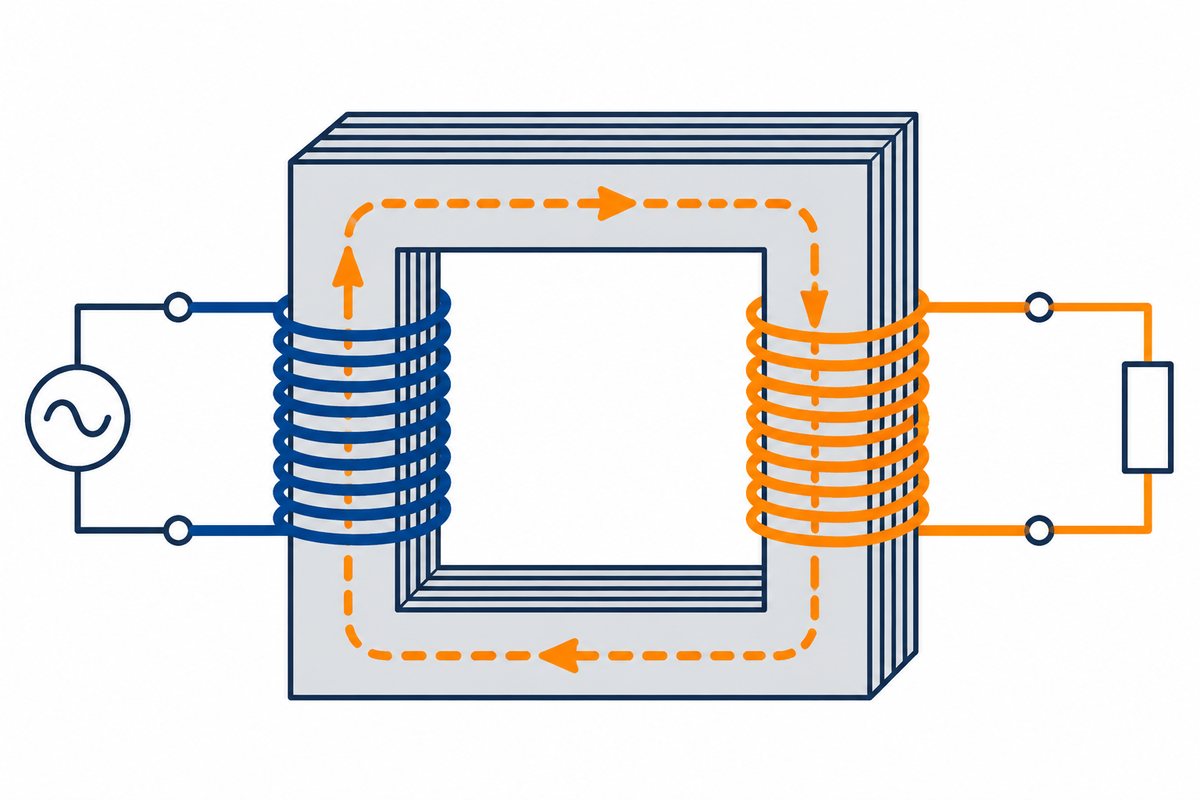
Three Steps of Transformer Operation
What Are the Main Components of a Transformer?
A transformer consists of several key components that work together to transfer electrical energy, change voltage levels, and ensure reliable operation.
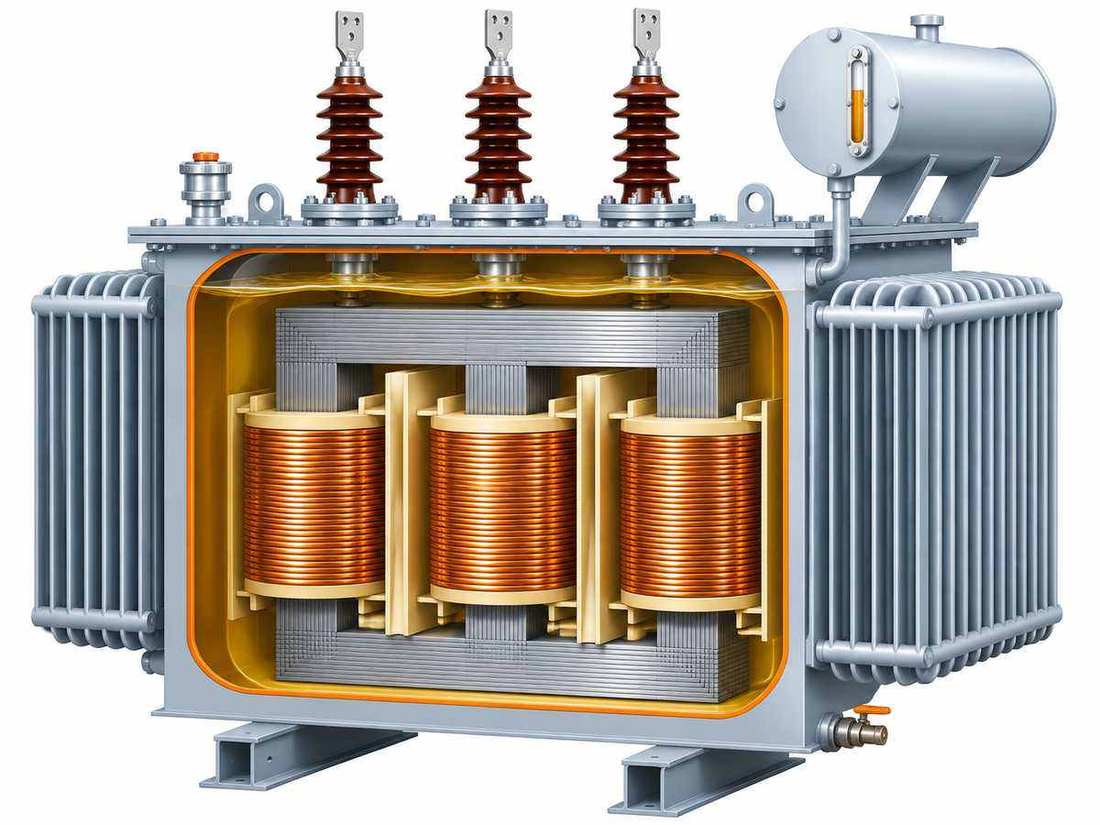
01. Magnetic Core
Provides a path for magnetic flux.
02. Windings
Transfer electrical energy between circuits.
03. Insulation System
Separates conductors and prevents electrical breakdown.
04. Tank & Cooling System
Protects components and manages heat.
01. Magnetic Core
The magnetic core provides a path for magnetic flux between the primary and secondary windings. It is commonly made of laminated electrical steel to reduce eddy-current losses and improve operating efficiency.
02. Primary and Secondary Windings
Windings are coils made of insulated copper or aluminum conductors. The primary winding receives electrical input, while the secondary winding delivers electrical output. Their turns ratio determines the voltage transformation.
03. Insulation System
The insulation system separates winding turns, different windings, and other conductive parts. In cast resin dry-type transformers, solid insulation materials surround the windings. In oil-immersed designs, solid insulation works together with insulating liquid.
04. Tank and Cooling System
In oil-immersed distribution transformers, the steel tank houses the core, windings, and insulating oil. Radiators help dissipate heat generated during operation. Dry-type transformers use different enclosure and air-cooling arrangements without insulating oil.
Other components, such as bushings, tap changers, conservators, breathers, and protection devices, may also be included depending on the transformer design and application.
What Are the Different Types of Transformers?
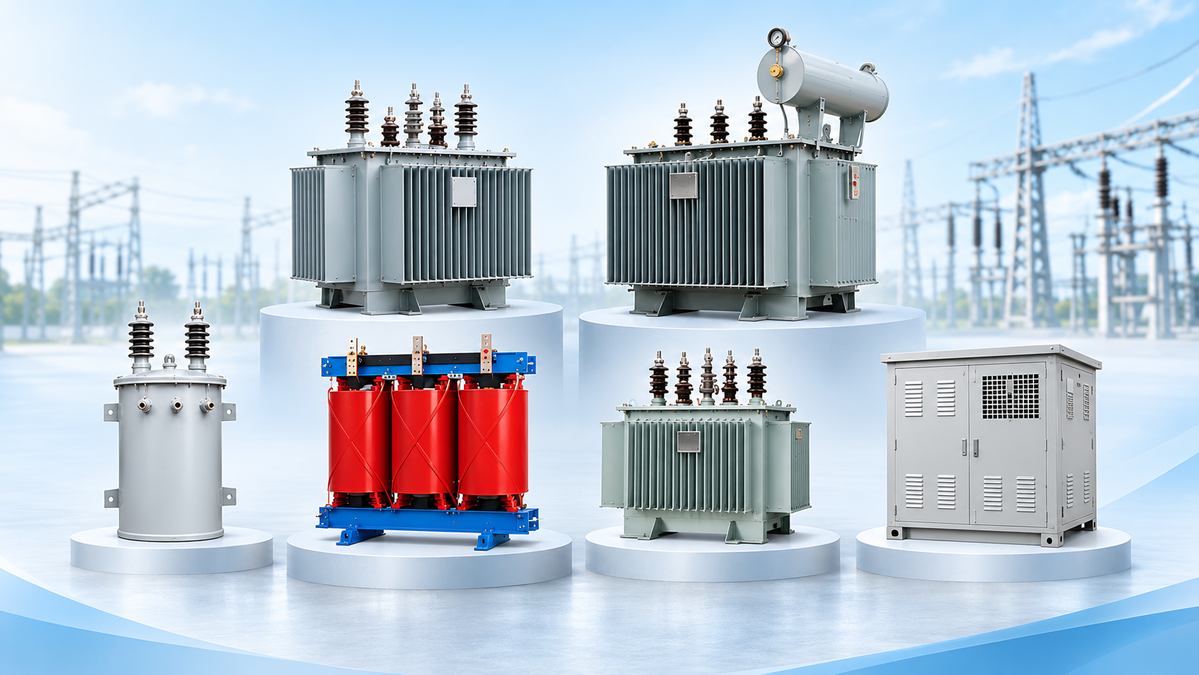
Transformers are classified by their insulation method, application, and installation arrangement. Each type is designed for different electrical and site requirements.
How to Choose the Right Transformer?
Selecting the right transformer requires matching electrical requirements, operating conditions, and installation requirements. Consider these five factors before choosing a transformer.
01 Rated Capacity
Determine the required kVA based on actual load demand and future expansion.
02 Voltage Level
Confirm primary and secondary voltage requirements.
03 Phase and Frequency
Match single-phase or three-phase supply and operating frequency.

Frequently Asked Questions
Dry-type transformers use solid insulation and air-based cooling, while oil-immersed transformers use insulating liquid for electrical insulation and heat transfer. The right choice depends on installation conditions, safety requirements, and project specifications.
Transformer capacity should be selected according to the expected load, operating conditions, motor starting requirements, and future expansion. An electrical engineer should verify the final rating to ensure reliable operation.
Yes. We can configure transformers to meet different project requirements. For example, we can review the required voltage, capacity, connection arrangement, and cooling method. In addition, our team checks the installation conditions before confirming the available specifications. This process helps us recommend a suitable configuration for your project.
Single-phase transformers serve single-phase electrical systems, while three-phase transformers support three-phase power networks. For example, residential applications may use single-phase units, whereas industrial facilities commonly require three-phase transformers. Therefore, select the phase according to your power supply and load requirements.
Not every transformer supports both frequencies. The rated frequency affects the magnetic flux and operating conditions. Therefore, always check the transformer nameplate and confirm the voltage and frequency requirements with the manufacturer before using it on a different power system.