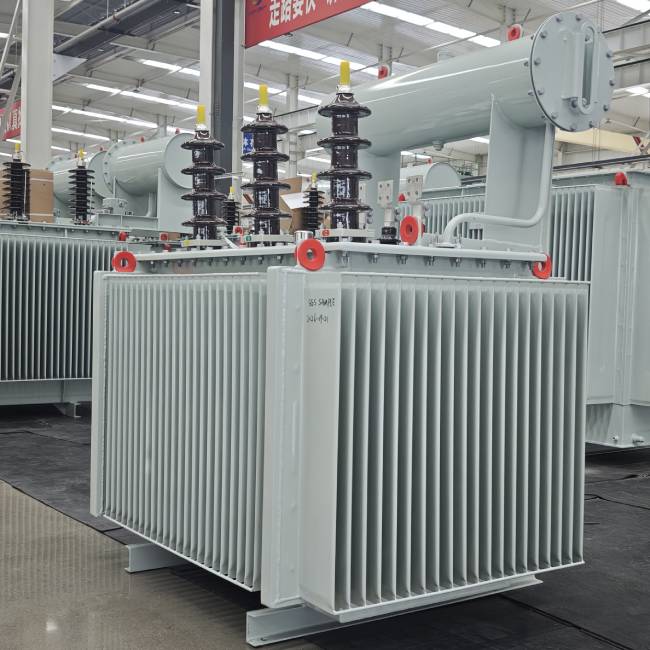
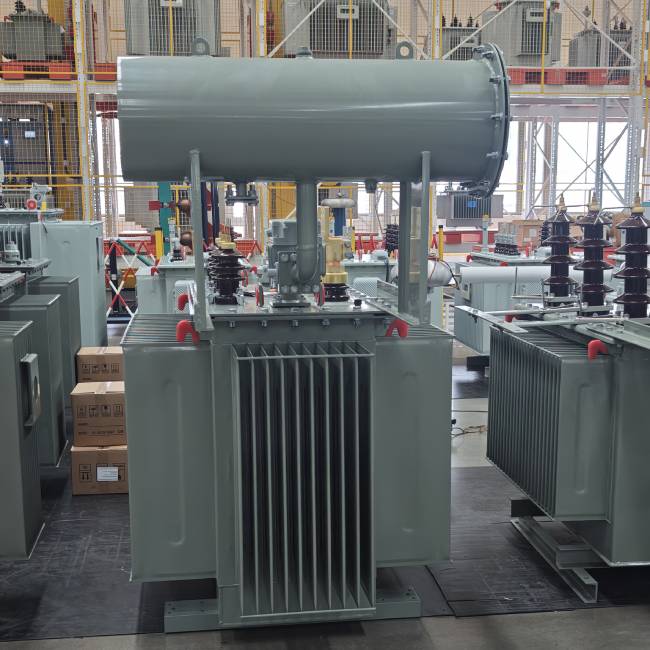
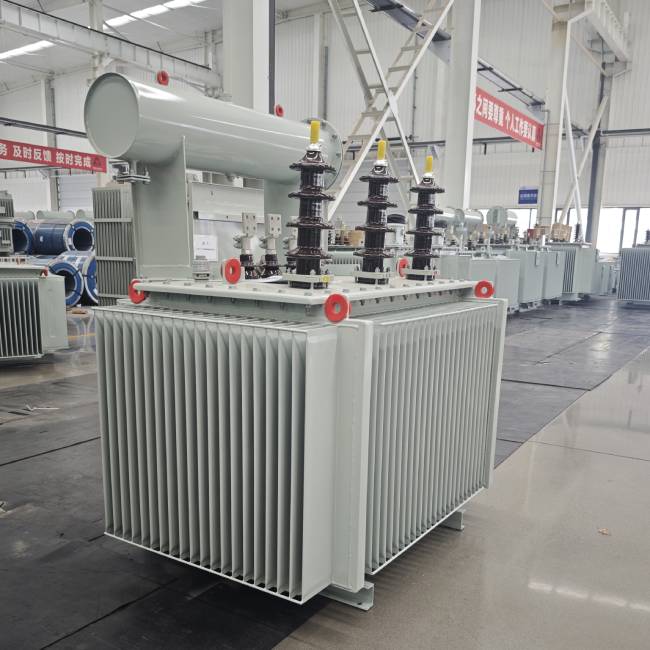
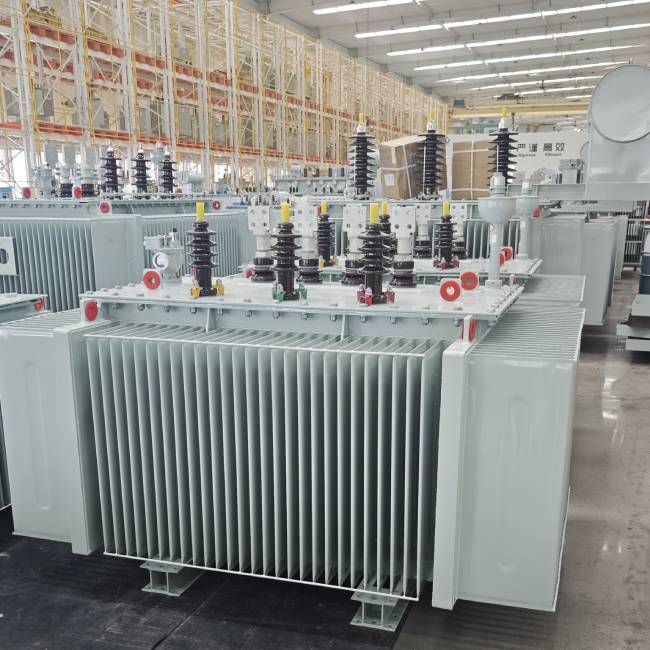
Product Overview
Our three-phase oil-immersed power transformers serve medium- and high-voltage power systems, including renewable energy projects, industrial facilities, and substations. The insulating oil provides electrical insulation and carries heat away from the core and windings. We offer 35 kV and 110 kV as standard voltage classes and customize other voltage ratios, impedance levels, cooling arrangements, and tap-changer options to meet specific project requirements.
Technical Specifications
| Category | Detailed Specifications |
| Voltage Combination | 35±2×2.5%kV / 0.4/0.69/10.5kV; 110±8×1.25%kV / 10.5kV |
| Frequency | 50Hz / 60Hz customized |
| Capacity Range | 3150kVA ~ 50000kVA |
| Tap Changer | Off-circuit tap changer standard; OLTC on-load tap changer optional |
| Connection Group | YNd11 |
| Short-circuit Impedance | 10.5% / 12% / 14% customizable |
| Cooling Modes | ONAN / ONAF / OFAF optional |
| Core Material | High-grade oriented cold-rolled silicon steel sheet |
| Tank & Accessories | Split radiator, conservator, gas relay, winding temperature sensor |
| Working Temp | -30℃ ~ +45℃ |
| Altitude Adaptation | ≤1000m standard; up to 4000m plateau customized |
| Key Features | Heavy load long-term stable operation, natural ester biodegradable oil optional |
| Standard Complied | IEC 60076, IEC 62271 |
| Application | Large PV base, onshore wind farm, regional high-voltage substation, energy storage station |
Capacity & Configuration Reference
Our oil-immersed power transformers cover rated capacities from 3,150 kVA to 50,000 kVA. We offer 35 kV and 110 kV as standard voltage classes, with other rated voltages, voltage ratios, impedance values, and tap-changer configurations available to meet project-specific requirements.
Use the following guide for preliminary project planning. Final transformer ratings and configurations depend on the electrical load, grid connection requirements, operating conditions, and applicable technical standards.
| Project Scale | Capacity Examples | Key Configuration Considerations | Typical Applications |
|---|---|---|---|
| Industrial and Collector Substations | 3.15–5 MVA | Voltage ratio, load profile, connection scheme, and future expansion | Industrial facilities, PV collector substations, and wind farm collection systems |
| Renewable Energy and Regional Substations | 10–20 MVA | Grid voltage, impedance, cooling requirements, and voltage regulation | Utility-scale solar PV plants, onshore wind farms, BESS connection projects, and regional substations |
| Large Grid-Connection Projects | 31.5–50 MVA | Short-circuit conditions, cooling stages, parallel operation, and site constraints | Major renewable energy projects, high-voltage substations, and heavy industrial power systems |
The capacities and applications above are illustrative references, not fixed pairings. Actual transformer ratings and configurations should be determined through project-specific engineering assessment.
Key Factors in Transformer Configuration
Voltage and Grid Requirements
We can configure the transformer for the required high-voltage and low-voltage sides, voltage ratio, vector group, impedance, and tap range. The final configuration depends on the grid connection requirements and project specifications.
Cooling and Load Profile
We evaluate rated output, expected loading, ambient temperature, and heat dissipation requirements when selecting the appropriate cooling arrangement. Available options may include ONAN, ONAF, and OFAF, depending on the transformer design.
Load Growth and Power Quality
Project planning should consider peak demand, future load expansion, harmonic distortion, and equipment energization requirements. These factors help determine the appropriate capacity, impedance, and thermal design.
Operating Environment
For installations at high altitude or in extreme temperatures, humid climates, or corrosive environments, we review the relevant insulation, cooling, protection, and material requirements to determine any necessary design adaptations.
Tap Changer Selection
An off-circuit tap changer may suit projects where voltage adjustments can be made while the transformer is de-energized. An on-load tap changer (OLTC) may be appropriate when voltage regulation during operation is required.
Request a Project-Specific Configuration
Share your single-line diagram, required voltage levels, load profile, site conditions, and applicable standards with our engineering team. We can use these details to assess the required capacity and develop a suitable transformer configuration and quotation.
Key Technical Features
Applications
Our oil-immersed power transformers serve a range of utility-scale energy and industrial power projects. We tailor voltage configurations, cooling arrangements, and other technical parameters to meet specific grid connection requirements and site conditions.