Transformers are essential components in electrical power systems. They use electromagnetic induction to change AC voltage levels while maintaining the same frequency, supporting efficient power transmission and distribution.
So, what are the 3 types of transformers? They can be classified in three common ways: by the number of phases, insulation and cooling method, and application. Each classification highlights different transformer designs, functions, and operating requirements. Understanding these differences helps engineers and buyers select the right transformer for their projects.
Types of Transformers by Number of Phases
Single-Phase vs. Three-Phase Transformers
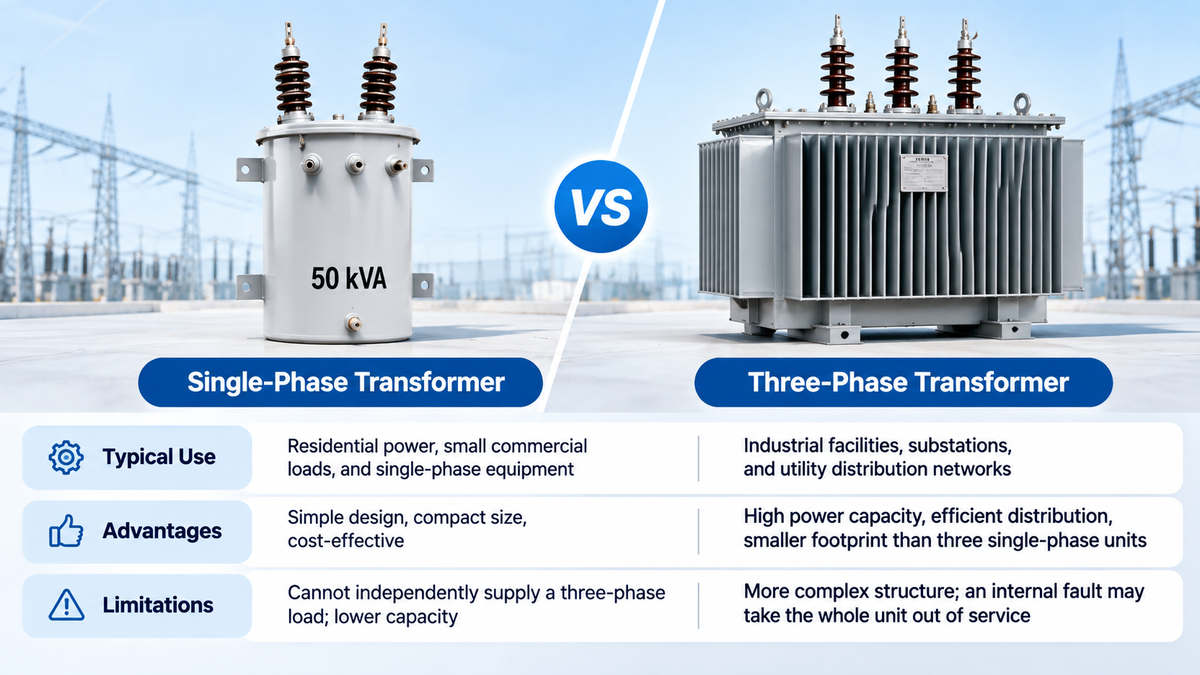
Transformers are classified as single-phase or three-phase based on their electrical supply systems. Each type serves different power requirements and applications.
Single-phase transformers typically serve residential applications and smaller loads. By contrast, three-phase transformers power industrial facilities, commercial buildings, and utility distribution networks.
Types of Transformers by Insulation and Cooling Method
Engineers classify transformers according to their insulation materials and cooling methods. In particular, this classification covers two main categories: oil-immersed transformers and dry-type transformers.
1. Oil-Immersed Transformers
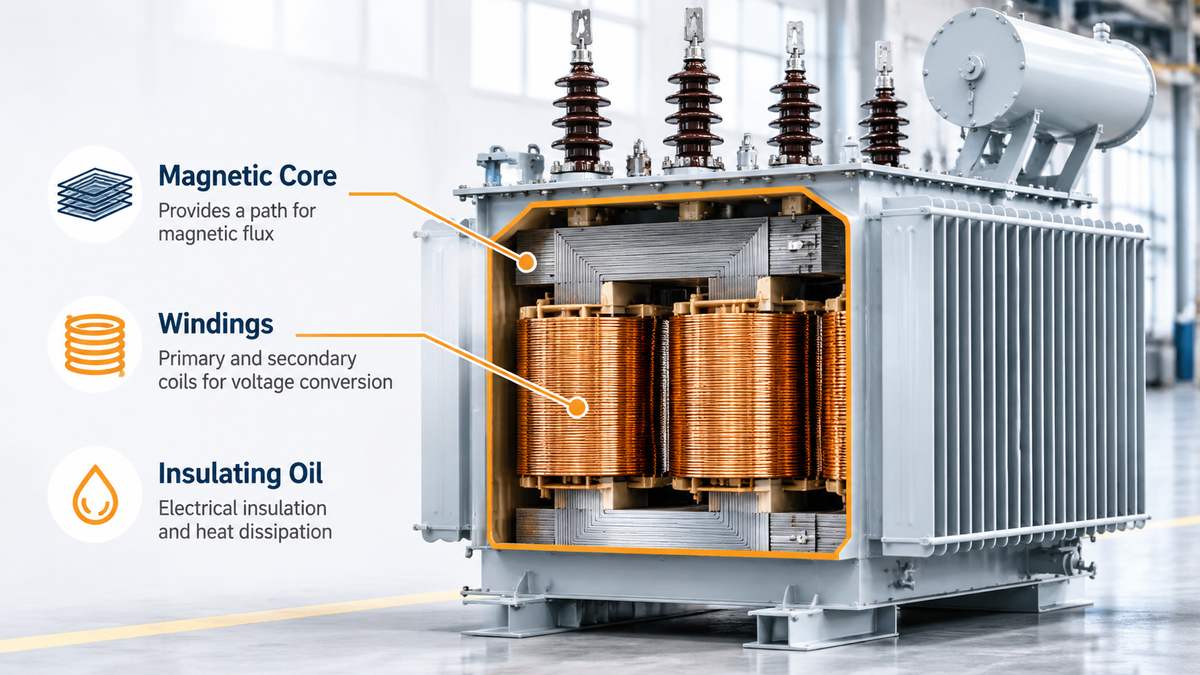
Oil-immersed transformers use insulating oil to provide electrical insulation and dissipate heat generated by the core and windings.
Main Cooling Methods
- ONAN (Oil Natural Air Natural): Uses natural oil circulation and natural air cooling without additional fans or oil pumps.
- ONAF (Oil Natural Air Forced): Uses natural oil circulation with cooling fans to improve heat dissipation.
- OFAF / OFWF (Oil Forced Air Forced / Oil Forced Water Forced): Uses oil pumps with forced air or water cooling, typically for higher-capacity power transformers.
Typical Applications
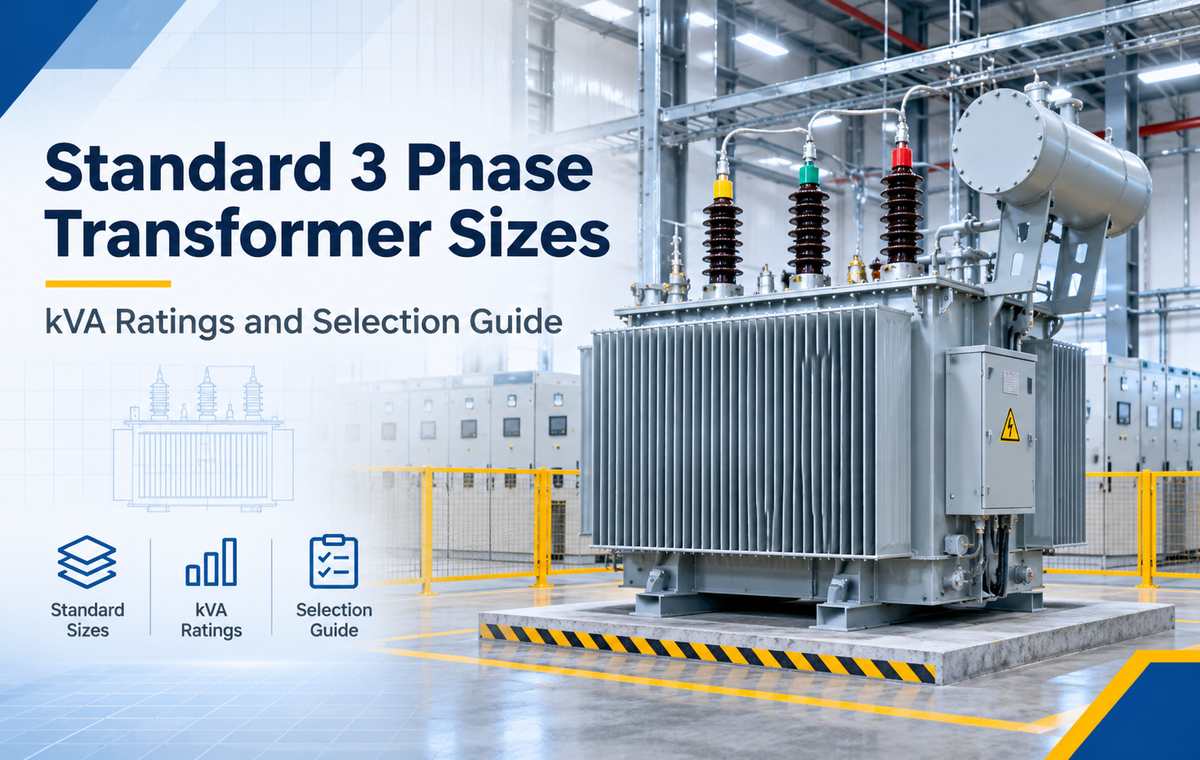
Power plants, substations, industrial facilities, and utility distribution networks commonly use oil-immersed transformers. In addition, these transformers step voltage up or down and support the transmission of large amounts of electrical power.
Advantages
- Effective cooling for medium- and high-capacity applications.
- Insulating oil provides both electrical insulation and heat transfer.
- Mature technology with proven reliability.
- Can be cost-effective for large power ratings, depending on the project.
Limitations
- Mineral insulating oil creates fire and leakage risks.
- Requires oil-condition monitoring and periodic maintenance.
- Oil containment, ventilation, and installation space must be considered.
For utility and industrial distribution, explore our Oil-Immersed Distribution Transformers.
2. Dry-Type Transformers
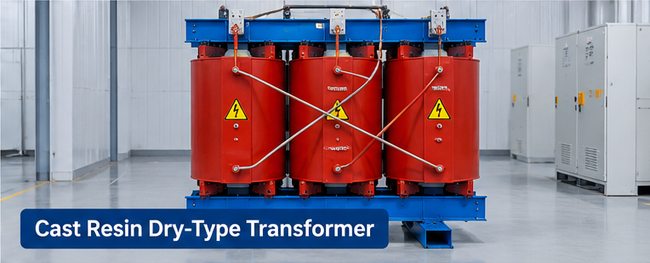
Dry-type transformers use solid insulation materials and air-based cooling systems instead of liquid insulating oil. They commonly operate with natural air cooling (AN) or forced air cooling (AF).
Main Types
- Cast Resin Dry-Type Transformers: Manufacturers encapsulate the windings in epoxy resin to provide electrical insulation and improve resistance to moisture and environmental contamination.
- Open-Wound Dry-Type Transformers: Manufacturers typically use vacuum pressure impregnation (VPI) or vacuum pressure encapsulation (VPE) processes to treat and protect the windings.
Typical Applications
Engineers commonly choose dry-type transformers for high-rise buildings, commercial complexes, hospitals, metro stations, data centers, and industrial facilities because these locations prioritize indoor installation and fire safety.
Advantages
- No insulating oil, reducing oil leakage and associated fire risks.
- Suitable for installation close to electrical load centers.
- No oil testing or replacement is required.
- Cast resin designs offer good mechanical strength and insulation performance.
Limitations
- Adequate ventilation is necessary for effective cooling.
- Some designs are sensitive to dust, moisture, and environmental conditions without appropriate protection.
- Purchase and installation costs vary according to capacity, design, and site requirements.
- High temperatures and prolonged overloads can accelerate insulation aging.
Explore our Cast Resin Dry-Type Transformers for indoor commercial and industrial power distribution.
Types of Transformers by Application
1. Power Transformers
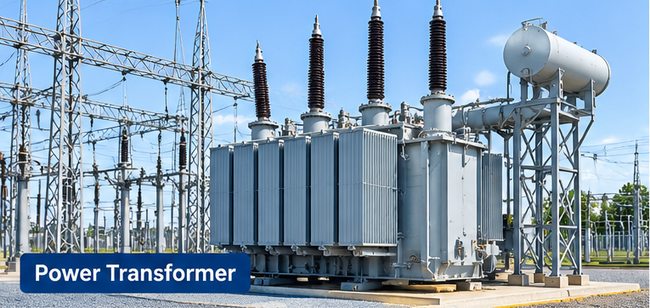
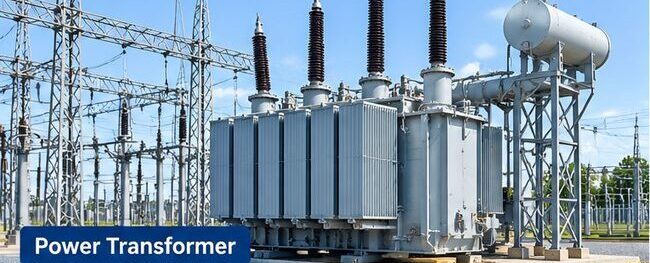
Power transformers are mainly used in power generation plants, transmission networks, and high-voltage substations. They transfer large amounts of electrical energy between different voltage levels to support efficient power transmission and grid interconnection.
There are two common applications:
- Step-Up Transformers: Increase the generator output voltage to a higher transmission voltage, helping reduce current and transmission losses over long distances.
- Step-Down Transformers: Reduce high transmission voltage to lower voltage levels at substations for further distribution to regional power networks.
Advantages
- High power capacity for large-scale electrical systems.
- High operating efficiency with optimized core and winding designs.
- Support long-distance power transmission by enabling higher transmission voltages.
- Can be customized for different grid voltage levels and operating conditions.
Limitations
- Large dimensions and heavy weight require specialized transportation and installation.
- High initial investment and infrastructure costs.
- Require appropriate cooling, protection, monitoring, and maintenance systems.
For utility and industrial power projects, explore our Oil-Immersed Power Transformers.
2. Distribution Transformers
Distribution transformers are installed in medium-voltage distribution networks, usually closer to end users. Their main function is to reduce medium-voltage electricity to low-voltage levels suitable for residential, commercial, and industrial consumption.
Common primary voltage levels include 10 kV, 11 kV, 20 kV, 33 kV, and 35 kV, depending on the local distribution network. Secondary voltage levels may include 220/380 V or 230/400 V, according to regional electrical standards.
Common distribution transformer configurations include oil-immersed and dry-type designs, with pole-mounted, pad-mounted, and indoor installation options depending on project requirements.
Advantages
- Provide reliable power supply close to end users.
- Available in different capacities, voltage ratings, and phase configurations.
- Flexible installation options for outdoor utility networks and indoor distribution facilities.
- Support residential, commercial, agricultural, and industrial power distribution.
Limitations
- Generally designed for lower power ratings than large power transformers.
- Overloading and high ambient temperatures can accelerate insulation aging and reduce service life.
- Outdoor installations require appropriate lightning protection, grounding, and weather-resistant protection.
Explore our Oil-Immersed Distribution Transformers for utility and industrial distribution networks.
For outdoor underground distribution projects, our Pad-Mounted Transformers provide an integrated enclosed solution. For indoor installations, Cast Resin Dry-Type Transformers are another option.
3. Special-Purpose Transformers
Special-purpose transformers are designed for specific industrial processes, electrical equipment, or testing requirements. Unlike standard power and distribution transformers, they often require customized winding arrangements, voltage characteristics, cooling systems, and operating conditions.
Common types include rectifier transformers, furnace transformers, and test transformers.
3.1 Rectifier Transformers
Applications: Rectifier transformers supply electrical power to rectifier systems that convert alternating current (AC) into direct current (DC). They are widely used in electrolysis, electroplating, aluminum production, chemical processing, and other industrial DC power applications. Specialized converter transformers are also used in HVDC transmission systems.
Advantages:
- Customized winding configurations to meet specific rectifier circuit requirements.
- Can support high-current industrial DC power applications.
- Multiple secondary windings and phase-shifting arrangements can be designed for specific rectifier systems.
Limitations:
- Rectifier loads generate harmonic currents that require appropriate system design.
- Often require specialized cooling, insulation, and protection arrangements.
- Harmonic filtering and reactive power compensation may be necessary.
3.2 Furnace Transformers
Applications: Furnace transformers supply electrical power to industrial furnaces, including electric arc furnaces and other high-current heating systems. They convert supply voltage into low-voltage, high-current power required by the furnace process.
Advantages:
- Designed to deliver very high secondary currents.
- Can accommodate demanding operating cycles and rapidly changing furnace loads.
- Winding, impedance, and voltage regulation arrangements can be customized for different furnace applications.
Limitations:
- Subjected to considerable thermal and mechanical stress during operation.
- Require appropriate cooling and protection systems.
- Operating efficiency and maintenance requirements depend on the furnace process and load conditions.
3.3 Test Transformers
Applications: Test transformers are used in high-voltage laboratories and factory testing facilities to generate high AC test voltages for evaluating the insulation performance of electrical equipment, including transformers, cables, switchgear, and other high-voltage components.
Advantages:
- Provide high-voltage sources for insulation and withstand testing.
- Allow controlled voltage application according to specified test procedures.
- Can be configured in cascaded arrangements or integrated into specialized test systems to achieve higher test voltages.
Limitations:
- Designed for testing applications rather than continuous power supply.
- Output voltage, current, and operating duration depend on the equipment design.
- Require specialized testing facilities, grounding arrangements, measurement equipment, and safety procedures.
These three types represent only part of the special-purpose transformer category. Other specialized designs include traction transformers, phase-shifting transformers, and variable-speed drive transformers.