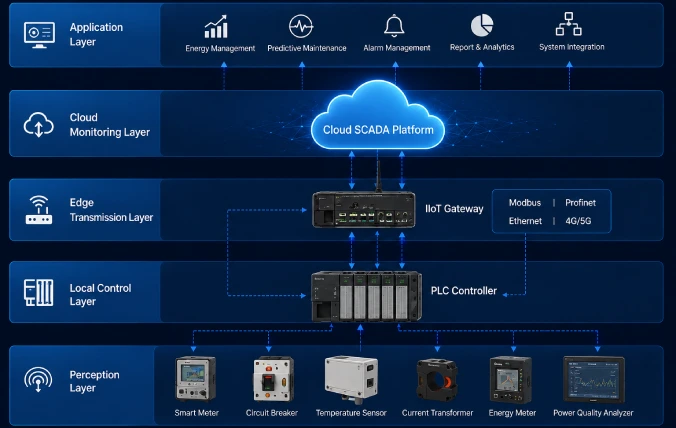
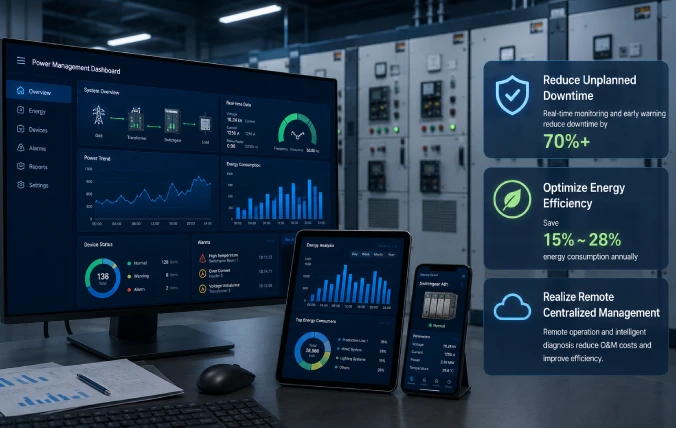
Many enterprise managers confuse consumer IoT with IIoT (Industrial Internet of Things). In fact, industrial IoT is completely different from civilian smart IoT in terms of real-time performance, stability, anti-interference ability, and data security. IIoT is specially built for industrial production scenarios such as factory workshops, power distribution rooms, and new energy stations, and is an indispensable core technology for industrial 4.0 digital transformation.
IIoT connects underlying sensors, PLC controllers, power distribution equipment, and cloud management platforms to realize full-link data interconnection of industrial equipment, solving the industry pain points of data isolation, difficult maintenance, and high energy consumption in traditional industrial control and power distribution systems.
1. Core Defects of Traditional Industrial Power Distribution Systems
A complete industrial IIoT solution is composed of four core hardware modules, which are highly compatible with electrical automation and power distribution equipment:
2. Three Core Values of IIoT Empowering Industrial Automation
- Break Equipment Data IsolationTraditional industrial equipment such as production line machinery and power distribution switchgears operate independently with no data interaction. IIoT gateway unifies the data of all equipment on the site to the cloud platform, realizing one-screen management of the whole factory and greatly improving the refinement of industrial management.
- Realize Predictive Maintenance of EquipmentBased on long-term IIoT data collection and AI algorithm analysis, it can accurately predict the aging trend of electrical components, line temperature change, and power harmonic abnormality. It changes the traditional passive fault maintenance mode into active predictive maintenance, effectively extending the service life of equipment and reducing maintenance costs.
- Reduce Industrial Operation and Maintenance CostsIIoT supports remote program debugging, equipment status checking, and fault diagnosis. For remote factories and overseas production bases, it can realize unmanned on-site operation and maintenance, saving a lot of labor, travel and time costs for enterprises.
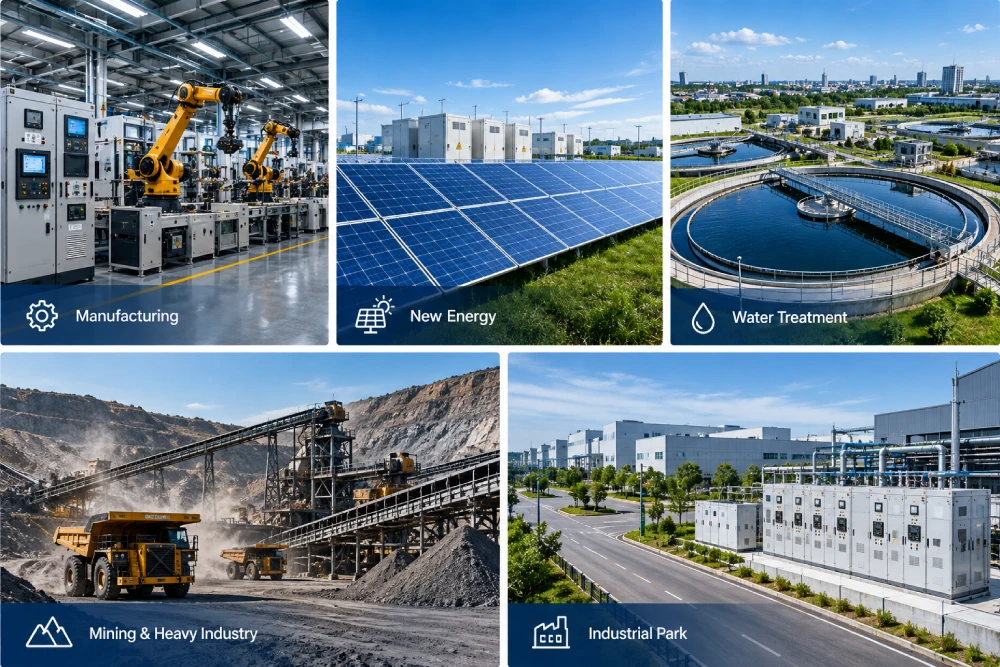
3. Main Industrial Application Scenarios of IIoT
4. Key Points for Enterprise IIoT System Deployment
Enterprises need to pay attention to four core points when deploying industrial IIoT systems: first, ensure that the equipment supports multi-protocol compatibility to avoid replacing existing equipment; second, select industrial-grade hardware with high protection level and anti-interference ability; third, support private cloud deployment to ensure industrial data security; fourth, adopt modular design to facilitate subsequent functional expansion.
Conclusion
IIoT industrial IoT is the core engine of industrial electrical automation and intelligent power distribution upgrading. It brings sustainable cost reduction and efficiency improvement benefits to industrial enterprises, and is the necessary choice for modern factories to realize digital transformation.
Henan Automation Control Technology Co., Ltd. provides full-set industrial IIoT solutions and supporting hardware equipment, supports personalized customization of industrial power distribution and automation systems. Download our industry case collection and technical white paper for free by contacting our professional team.